Halle
Úvodní informace
Co dál o mně
| Nejradši láduju do uší | Jazz |
| Dělám/e okolo muziky jako | PR manažer |
| Trochu omáčky o mně | Coloring pages in a shared room: Make space for other activities A room can support coloring while other people do unrelated things, but an empty table does not reveal every condition. It may be needed shortly, a nearby route may need to stay clear, or someone may prefer the room without added sound. Even with free printable coloring pages, the practical question is how the activity fits into a shared room. Choose a setup people can use, check existing demands, agree on the overlap, and make changes easy to communicate. The picture remains a personal choice even when its place needs to change before you finish. 1. Notice what else the room needs to support Treat coloring as an activity entering a room with existing uses. Look at surfaces, access routes, and other people’s work before spreading out. What appears vacant may already have a practical role. 1.1 Identify surfaces and routes already in use Imagine a common table that looks empty but will soon be needed for meal preparation. The route beside it also needs to remain clear. Ask about those uses before placing your sheet and supplies. A clear tabletop does not establish that it is available for the whole activity. Identify the portion you can use and the condition that would end that use. A useful first check can stay simple:
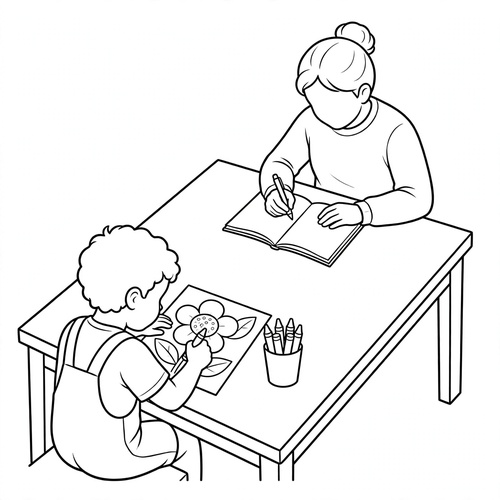
A child colors a flower while adult writes nearby 1.2 Ask which conditions are actually negotiable Someone may welcome a sheet at one end of the table while needing the rest for another project. Ask which part can change and which is already required. Negotiate that overlap instead of assuming everyone else should relocate. You can consider a smaller setup, another agreed place, or a pause. A child spreads a coloring sheet and a large pencil box across a dining table because nobody is sitting there. A few minutes later, a parent needs half the table to prepare food. They move the pencil box and keep the active sheet on one end. Coloring continues because the arrangement changes, not because either activity has to win. 2. Choose an arrangement that limits unwanted overlap Keep the activity inside what was agreed. The physical footprint, sound, and usable view can affect other people differently, so check the parts you actually want instead of prescribing one ideal setting. 2.1 Keep the active page inside the agreed space Place the active sheet and ordinary items within the available area. Check the whole sheet, including the movement you expect to make while using it. If unused supplies exceed the agreed edge, reduce those optional parts. Choosing another picture will not solve a space problem when the same setup would still occupy the same place. The same principle applies when you use coloring pages for printing at home. A newly printed design does not create more room. The practical issue is whether the paper, pencils, markers, and hand movement fit inside the area others agreed you could use. Do not treat neighboring empty space as an automatic extension of your own area. 2.2 Check sound and visibility without prescribing an ideal setup If you want audio, ask how shared sound would affect other activities. If you prefer a certain position, check whether taking that place changes someone else’s access. You do not need universal instructions about lighting, posture, or concentration to resolve the immediate question. A preference can guide a request without creating an entitlement to rearrange other people’s work. When an optional condition matters, keep the response practical:
3. Make the agreement concrete enough to use A brief arrangement needs an understandable endpoint and a way to announce change. Keep those practical terms separate from decisions about the subject, colors, or amount completed on a personal picture. 3.1 Name when the surface may be needed again Agree on a concrete condition, such as clearing your portion before meal preparation begins. That is more useful than promising to move “soon.” Think about where the sheet can go so releasing the table does not depend on finishing a region. The endpoint concerns occupancy and handling rather than how much of the image should be colored. If a shared physical picture is involved, agree how it will be put aside without changing its users‘ choices. Knowing the practical endpoint can make a temporary place useful without pretending it is permanent.
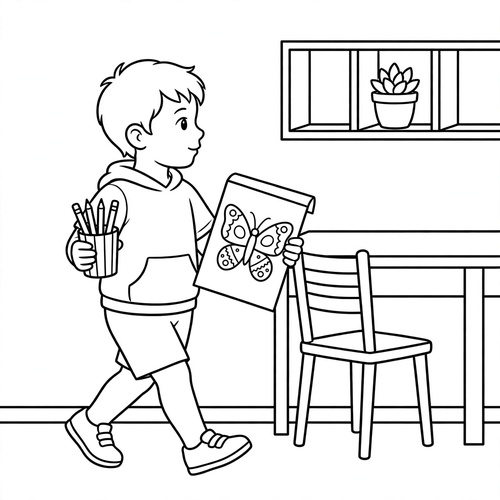
A child carries a butterfly page to a clear side desk 3.2 Agree how a changed condition will be communicated Someone may need the table earlier than expected. Agree that they can say so directly, with enough information for you to respond. A brief notice that meal preparation is beginning can be sufficient. Notice about the surface does not grant authority over the picture’s progress or content. Make the changed condition clear, then decide how to move or pause the setup. 4. Choose coloring pages for the space actually available at ColoringPagesCreative ColoringPagesCreative has homepage collections and discovery sections for exploring coloring pages when the shared-space arrangement calls for another drawing. A current supported sheet may already fit. Inspect a new candidate and confirm its offered format, paper guidance, and relevant terms before preparing it. The resource does not guarantee a particular size or layout for every room. Choosing a usable drawing is separate from agreeing to occupy a shared surface or add sound. 4.1 Use the observed homepage discovery routes Browse for a specific changed requirement instead of treating every room adjustment as a reason to choose another picture. Inspect the actual candidate. A topic name does not establish a certain paper size or make any surface workable. If the current sheet already fits, there may be no reason to replace it. 4.2 Check the exact resource before a new use Confirm the new resource’s preparation information and relevant terms. A room agreement does not resolve access or copying, while an available sheet does not reserve the room. Someone wants a larger animal design because the first picture feels cramped. Before printing another sheet, they check the remaining table space and discover that a larger page would overlap a sibling’s homework area. They keep the current drawing instead. The decision follows the actual room rather than assuming a different picture will solve the problem. 5. Adjust when the shared use changes When the room’s needs change, preserve the sheet and reconsider the next activity. You can release the surface at the point reached. Unfinished coloring does not need to delay another agreed use. 5.1 Move or pause the setup without losing the sheet As meal preparation starts, stop at the region you have reached and put the sheet somewhere agreed. You do not need to finish the petal or complete a color sequence first. This applies equally to a sheet from a book or printable coloring pages pdf prepared earlier. Once the page is physical, the important issue is preserving that work while making the shared surface available again. Ask before handling another person’s picture. Keep a personal next-area cue if useful, but do not make clearing the surface depend on reconstructing every earlier choice. The picture can remain available while the place changes purpose.
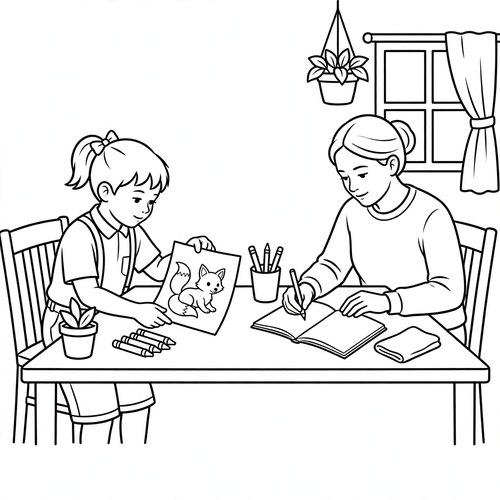
A child clears a fox page as adult takes the table 5.2 Choose another place only after checking it An apparently spare desk may already support another person’s project. Check its availability and the actual sheet’s fit before transferring the activity. Continue only when the destination is both usable and wanted. Otherwise leave the work paused instead of requiring others to relocate. A temporary pause simply recognizes that the shared room has another current use. When suitable space becomes available again, the same sheet can return without needing to be completed or replaced. Keep the active sheet within the agreed space and make a changed use easy to communicate. A different place is useful only after checking it, and unfinished coloring can remain an available choice when the shared room now needs something else. When the arrangement stays clear, the picture remains personal while the space remains shared. You can stop, move, return, or choose another time without treating unfinished work as a problem. Check Here: Printable Coloring Pages For Farm Animals Gardens And Country Fun Printable Coloring Pages For Creative Days You Can Start Anytime |